Key Travel Takeaways
- Mandatory Entry Taxes: $23 USD total per person ($20 USD Comarca Guna Yala fee + $3 USD Puerto Cartí dock fee), payable strictly in cash at the border checkpoint and dock.
- Transport Timing & Rates: Authorized 4x4 SUV round-trip from Panama City is $60 USD (2.5 hours); round-trip boat transfer from Puerto Cartí is $30 USD (~30 minutes). Hotel pickup is between 5:00 a.m. and 5:30 a.m.
- Strict Border Requirements: You must bring your original physical passport (no photocopies or smartphone photos are accepted under any circumstances).
- No ATMs or Cards: Bring sufficient cash in small USD denominations ($1, $5, $10, $20). No ATMs or card readers exist on any of the islands.
- Direct Host Booking: Booking directly with native Guna families on Isla Pelícano eliminates agency middleman commissions (0% markups) and guarantees authentic local hospitality.
1. From Panama City Skyscrapers to Off-Grid Paradise
Can you really leave the glass high-rises and frantic traffic of Panama City at dawn and be swinging in a hammock over crystal-clear turquoise waters before lunch? Yes, absolutely. The San Blas Islands sit only a few hours from the capital, yet crossing into Guna Yala feels like stepping into a completely different world: no roads, no traffic lights, no mega-resorts, and often no cell phone signal whatsoever.
That dramatic contrast is precisely why travelers fall deeply in love with these Caribbean waters—and also why unprepared visitors face avoidable frustrations. Panama's San Blas Islands richly reward travelers who plan with care. Arrive without the required physical documents, fail to bring small cash, or book through an expensive third-party agency in the city, and your tropical escape can begin with stress on a hot concrete pier.
We are the native Guna host family of Pelicano Island (known in our native language as Gorgidub). For years, our family has lived on this tiny coral cay, welcomed travelers from every continent, and shared the simple rhythms of Caribbean island life. We created this comprehensive practical guide to share exactly what you need to know before you set off: from the mountain road crossing and the comarca entry fees to the unwritten rules of Guna hospitality. Read this once, pack with intention, and you will spend your vacation relaxing in pristine water rather than solving logistical hurdles on a dock.
2. Guna Yala Archipelago: Autonomous Indigenous Homeland
The islands world-famous as San Blas are officially designated as Guna Yala, an autonomous indigenous territory (comarca) stretching along approximately 370 kilometers of Panama's northeast Caribbean coastline. The Guna people govern this territory autonomously through our own traditional parliament—the Guna General Congress—and our ancestral spiritual and civic leaders, known as sailas.
When you visit San Blas, you are not checking into a commercial tourism corridor or a government national park. You are entering an ancestral indigenous homeland with its own legal framework, protected borders, and cultural statutes. Outside companies, foreign investors, and international hotel chains are strictly prohibited by Guna law from purchasing island land or building resorts. Tourism is managed exclusively by native families and community cooperatives.
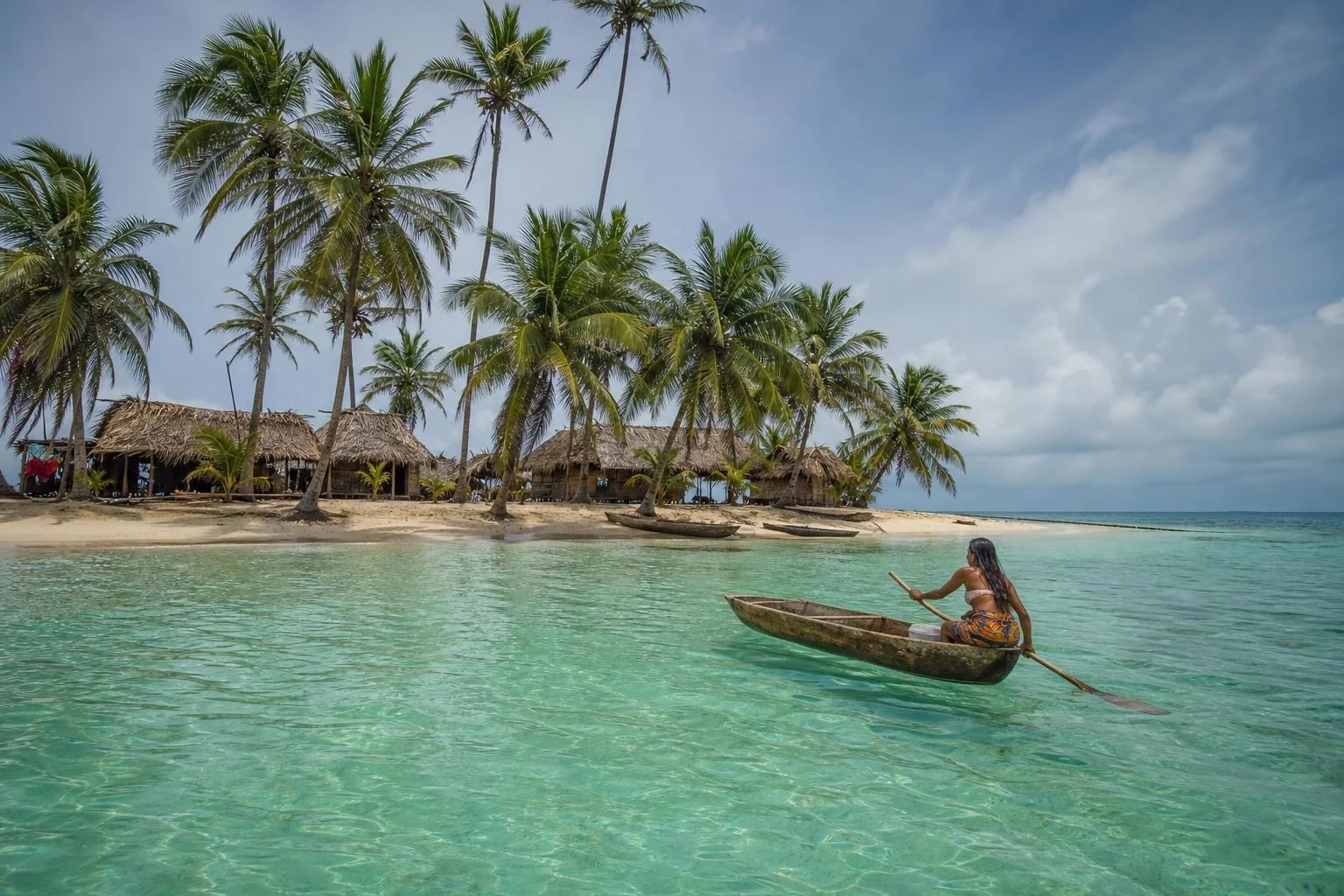
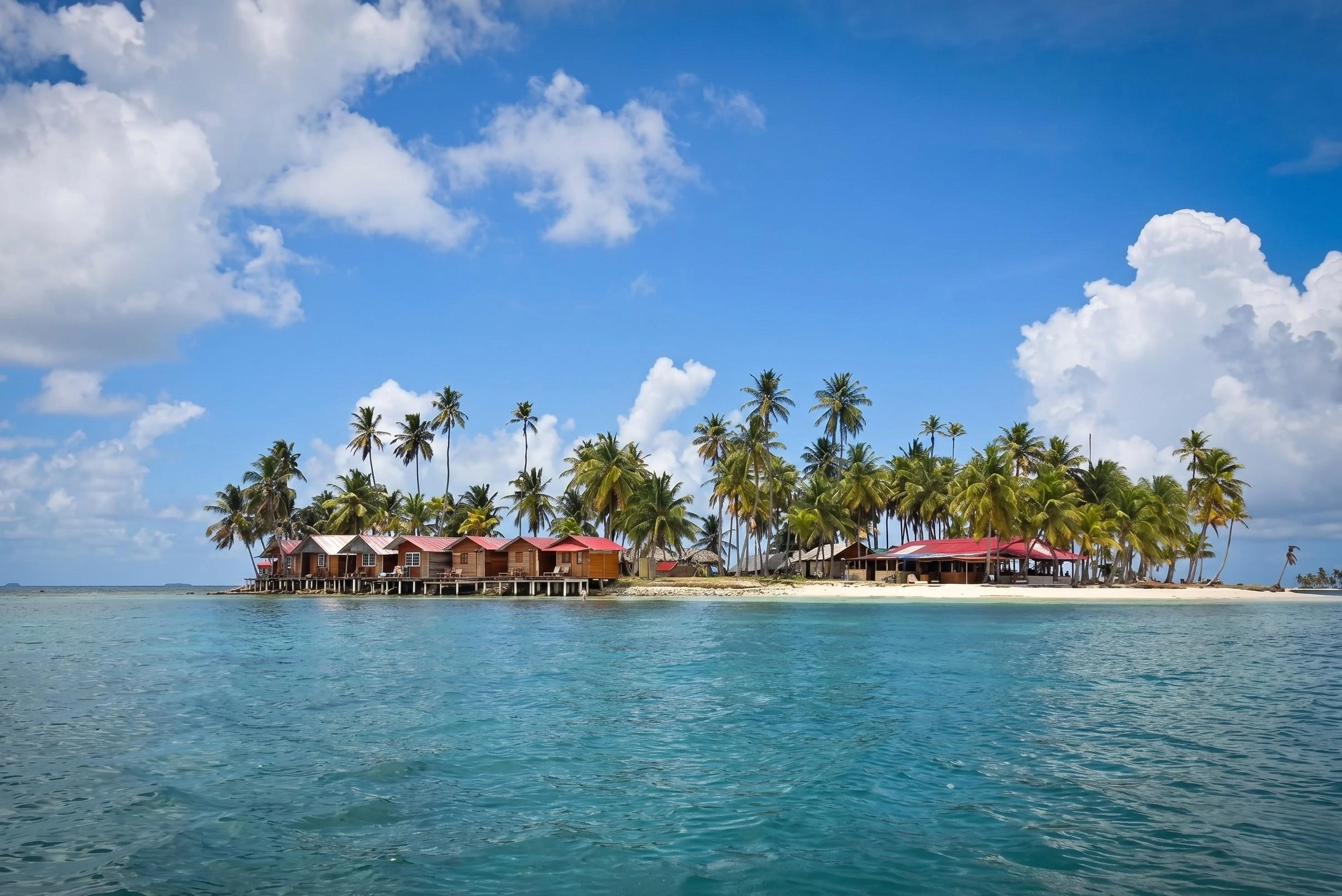
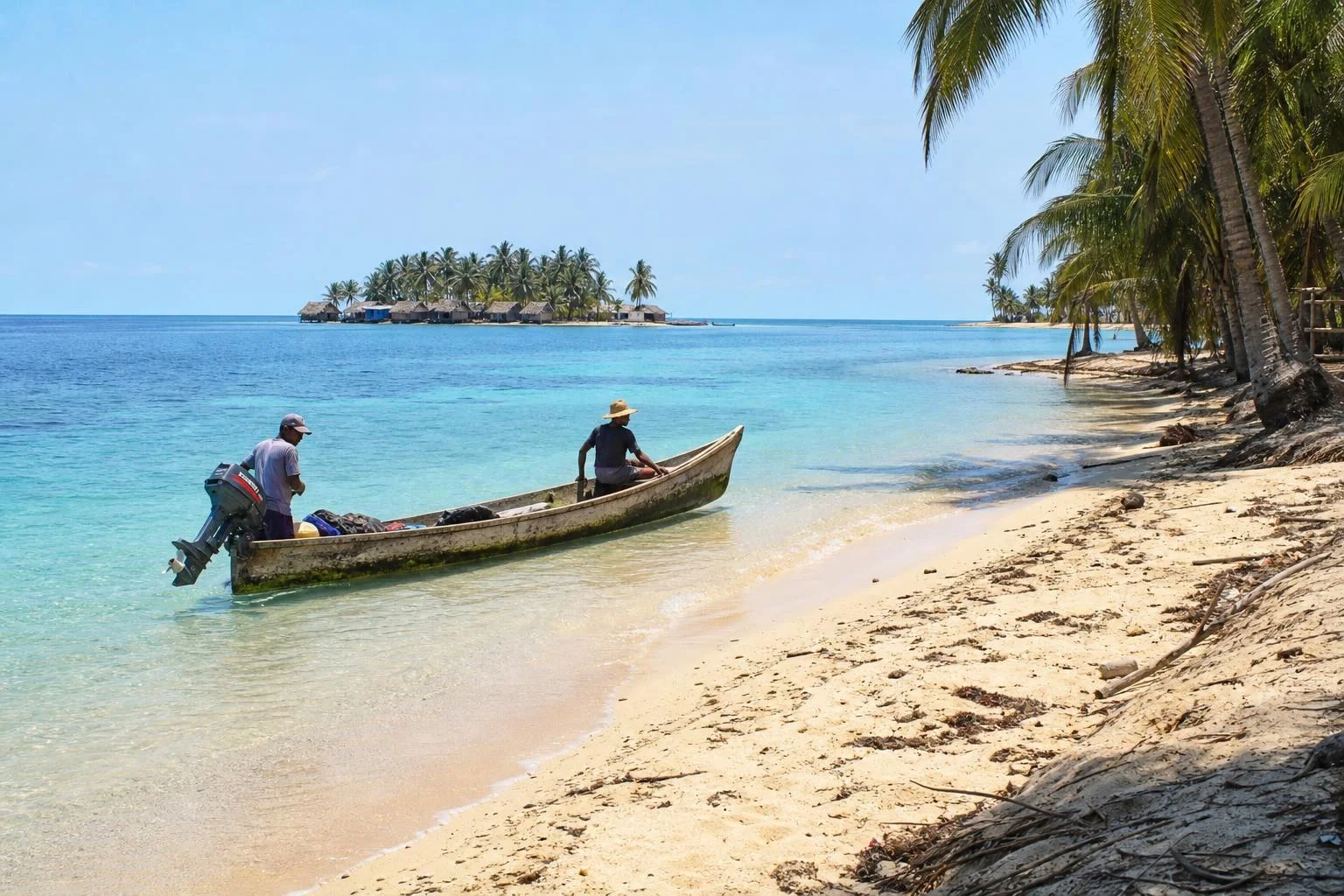
The archipelago consists of roughly 365 islands and coral cays—one for every day of the year according to local lore. Around 50 of these islands are densely populated community villages, where extended families reside in traditional cane-and-thatch homes. Other cays are tiny, uninhabited sandbars surrounded by vibrant reefs, while some feature small family-run eco-camps offering rustic thatched cabins directly over the sand or water, such as our home on Pelicano Island.
3. Step-by-Step Logistics: The 4x4 Road Journey & Checkpoint
Almost all travelers reach the islands via the overland 4x4 route from Panama City, concluding the final stretch aboard a native motorboat (lancha). The itinerary follows a precise and time-tested schedule:
- 05:00 a.m. – 05:30 a.m. Hotel Pickup: An authorized 4x4 SUV driver arrives directly at your accommodation in Panama City. Punctuality is essential, as missing the departure window causes significant delays at the mountain checkpoint and boat docks.
- 05:30 a.m. – 07:00 a.m. Pan-American Highway: The vehicle travels east on the smooth asphalt of the Pan-American Highway toward El Llano. Most drivers make a brief 15-minute roadside stop for fresh coffee, snacks, and restrooms.
- 07:00 a.m. – 07:45 a.m. Llano-Cartí Mountain Pass: The 4x4 turns north onto the Llano-Cartí road, ascending into the dense cloud forests of the continental divide. This road features sharp roller-coaster curves and steep inclines, making four-wheel drive legally and mechanically mandatory. Tip: If you suffer from car sickness, take motion sickness medication before departing the city and sit near the front.
- 07:45 a.m. – 08:15 a.m. Guna Yala Checkpoint: At the Nusagandi border station, Guna comarca officials inspect every vehicle. Every passenger must present an original physical passport and pay the $20 USD comarca entry fee ($5 USD for Panamanian nationals/residents) in cash.
- 08:30 a.m. Puerto Cartí Arrival: You arrive at the coastal dock of Cartí (Tupile or Barsukun), pay the $3 USD port tax in cash, and meet your boat captain.
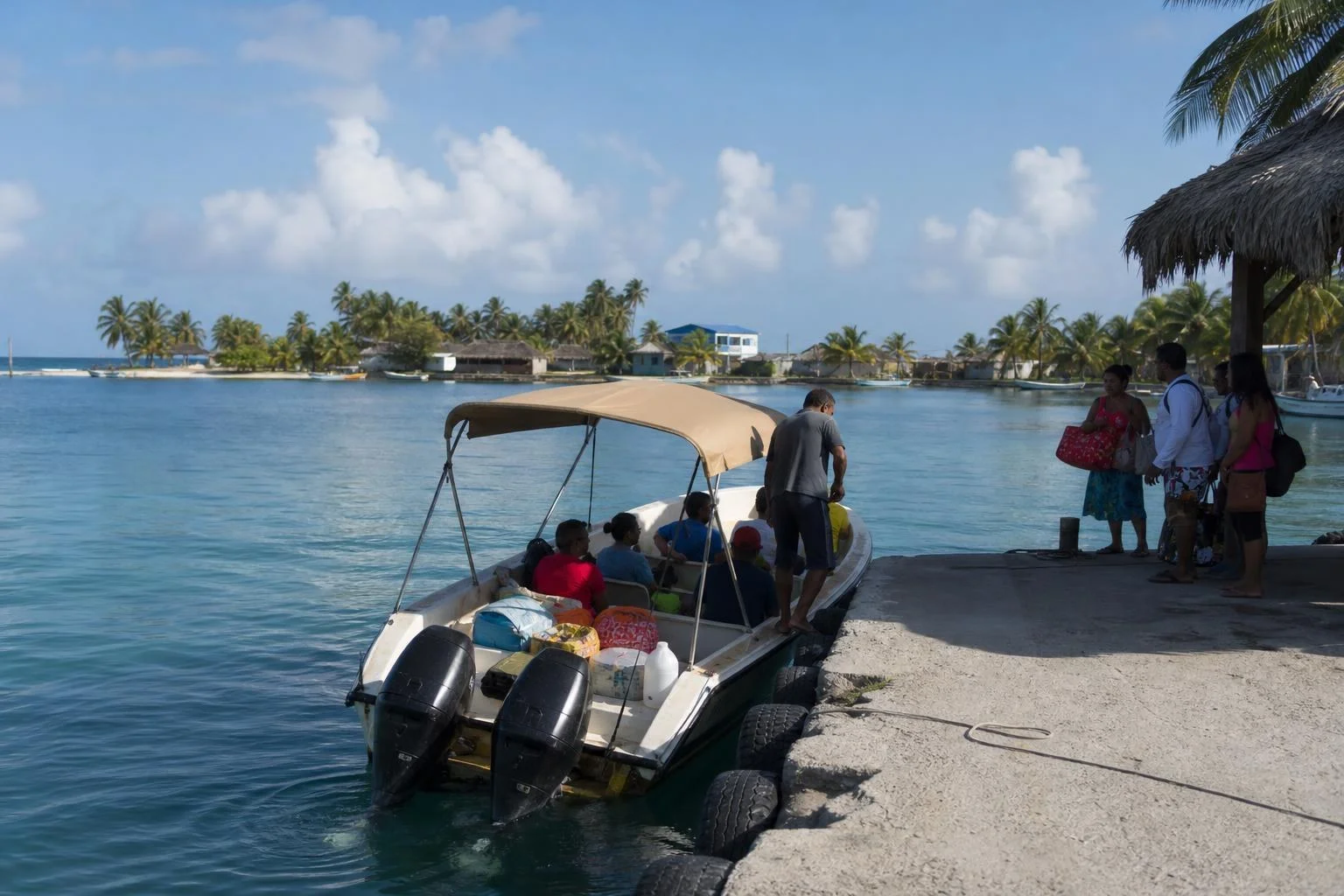
- 09:00 a.m. – 09:15 a.m. Island Arrival: A 30-minute motorized boat ride brings you to Isla Pelícano across scenic turquoise waters.
4. Accommodation Decision: Sailboats vs. Island Cabins
Deciding where to sleep in San Blas is the choice that shapes your entire Caribbean adventure. Here is how staying on an island cabin compares to booking a sailing charter:
| Feature | Sailboat Charter | Traditional Island Cabins | Isla Pelícano Cabins (Recommended) | Multi-Day Island Hopping Tour |
|---|---|---|---|---|
| Base & Movement | Anchored at sea; moves between cays | Based on one island; boat day tours | Private Island Direct reef 5m away; daily tours | Sleeps on different islands each night |
| Sleeping Comfort | Compact berths; motion at sea | Rustic beds on solid sand ground | Beachfront & Overwater cabins on solid ground (0% seasickness) | Handpicked traditional cabins across 3+ islands |
| Bathroom Setup | Marine head (pump toilet); restricted water | Shared island bathrooms & fresh showers | Shared (Private) or En-suite (Premium overwater) | Private or shared depending on island |
| Dining & Meals | Prepared by boat crew on galley | Fresh local fish, plantains, coconut rice | Full board with fresh daily catch & lobster in season | Full board included on all host islands |
| Guna Cultural Contact | Minimal; brief stops on tourist cays | Daily contact with host family | 100% Direct Contact Native Guna host family (0% commissions) | Authentic encounters with multiple village families |
| Official Rates | $180–$350+ USD per person/day | $120–$150 USD per night | From $145 (shared), $160 (private), $175 (premium) | From $285 USD (min 2 nights / 3 days all-inclusive) |
| Best Suited For | Experienced sailors, deep-sea lovers | Backpackers, cultural travelers | Couples, families, Money Heist fans | Adventurers wanting to explore the full archipelago |
Why Do Pelícano Island Cabins Stand Out?
Unlike generic cabins or foreign-owned sailboats, staying on Isla Pelícano places you directly on the real filming location of Netflix's Money Heist (Tokio and Río's sanctuary). You sleep on solid ground without seasickness, enjoy direct reef snorkeling five meters from your porch, and book directly with our Guna host family with 0% agency commissions.
5. Interactive 9-Item Packing Checklist: What to Pack
Packing for San Blas requires the mindset of an off-grid expedition. There are no convenience stores, pharmacies, or ATMs on the islands. Whatever you forget must wait until you return to the mainland. We strongly advise packing inside a soft backpack or duffel rather than a rigid rolling suitcase. Use this interactive checklist to prepare your trip:
Essential Packing Checklist for San Blas
6. Respecting Guna Culture, Traditions & Etiquette
The Guna people have maintained our ancestral way of life through centuries of resilience, including the famous 1925 Dule Revolution that secured our territorial autonomy. When you arrive in Guna Yala, you are welcomed as an honored guest in a sovereign indigenous society. Following basic local etiquette ensures warm and respectful connections:
- Photography Guidelines: Always ask for permission before taking photographs of local people, especially women wearing traditional attire and young children. Many community members will politely request a modest gratuity (typically $1 USD) for personal portraits, while some may prefer not to be photographed at all. Please respect their wishes without argument.
- Village Dress Code: While swimwear, bikinis, and boardshorts are perfectly normal on the beaches of uninhabited tourist cays and Pelicano Island, modest attire is required when visiting residential villages. Cover your shoulders and wear shorts or a light sarong when walking through community paths.
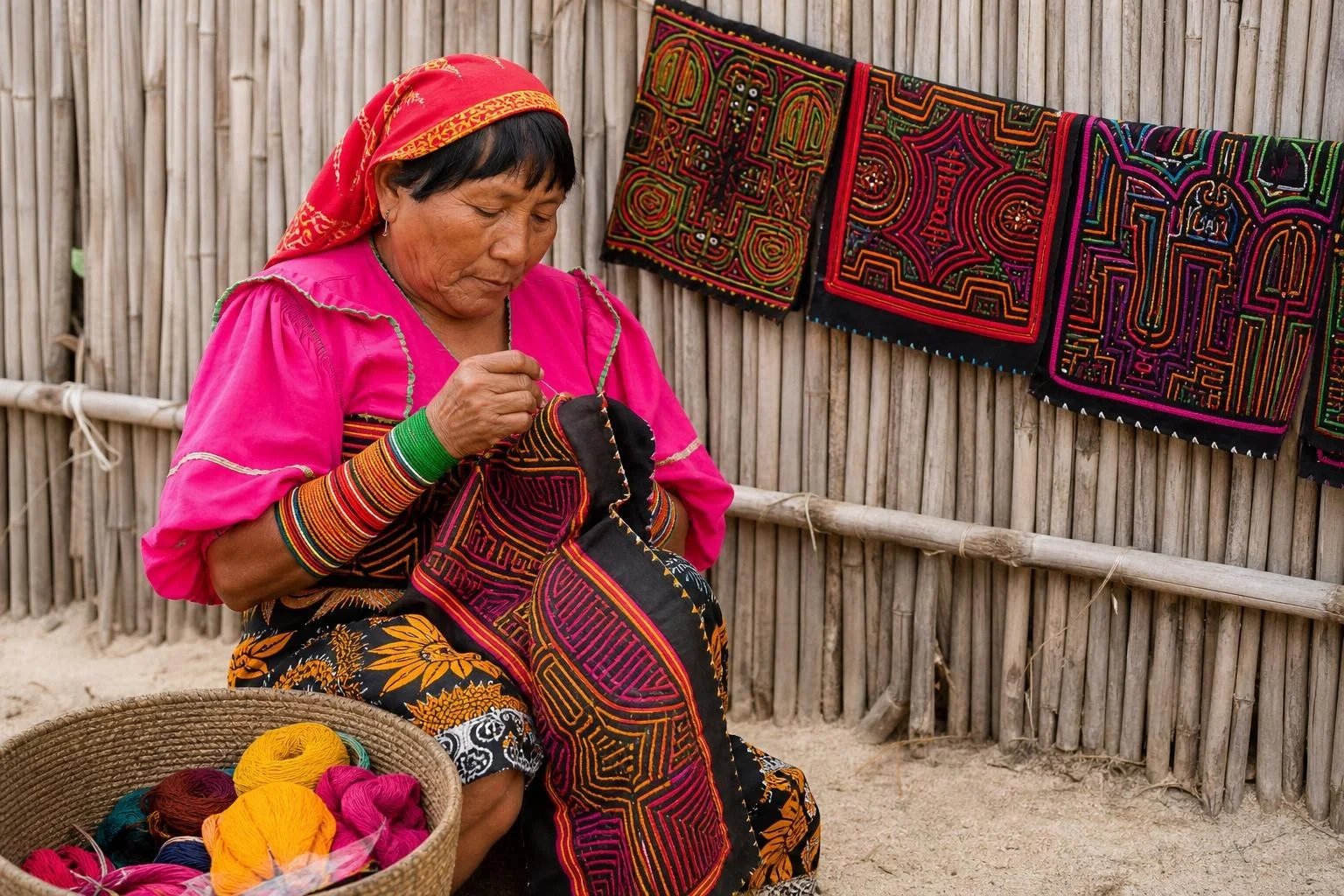
- Support Native Artisans: The mola is the celebrated textile art of Guna women, handcrafted through weeks of reverse-appliqué needlework. When you purchase molas directly from the artisan who created them, 100% of your money goes straight into her family's household. Avoid aggressive bargaining; you are purchasing a unique piece of living cultural heritage.
- Respect Island Ownership: Every coconut palm and every island in Guna Yala belongs to a native family or community clan. Do not harvest coconuts from trees or collect fallen fruit without explicit permission, as coconuts represent an ancestral cash crop.
7. Off-Grid Living: Electricity, Water & Connectivity
Transitioning to off-grid island living is the greatest luxury of San Blas, but it requires realistic expectations:
- Mobile Connectivity & Wi-Fi: Treat your trip as an intentional digital detox. Digicel and Tigo provide intermittent cell coverage on islands closest to the mainland, but outer cays have zero signal. Wi-Fi is rare or nonexistent. Download offline Google Maps, your favorite reading material, and playlists before leaving Panama City, and inform your loved ones that you will be joyfully unreachable for a few days.
- Fresh Water Conservation: Fresh water on small coral islands is transported in drums from mainland rivers or collected through rainwater cisterns. Enjoy refreshing showers after a day in the saltwater, but use water mindfully and turn off taps completely.
- Pack In, Pack Out (Waste Management): Small coral islands lack municipal trash collection facilities. Bring a reusable water bottle (our camp provides drinking water refills) and carry all personal plastic waste, empty toiletries, and packaging back to Panama City for proper recycling. Never discard plastics into the ocean or touch coral formations.