Key Takeaways: Guna Yala Culture & Traditions
- Ancestral Self-Governance: Autonomous indigenous territory since the **1925 Dule Revolution**, governed by traditional chiefs (sailas) and communal assemblies in the onmaked nega.
- Matrilineal Society: Inheritance, property, and family lineages pass through women. Husbands join the household of their bride's family upon marriage.
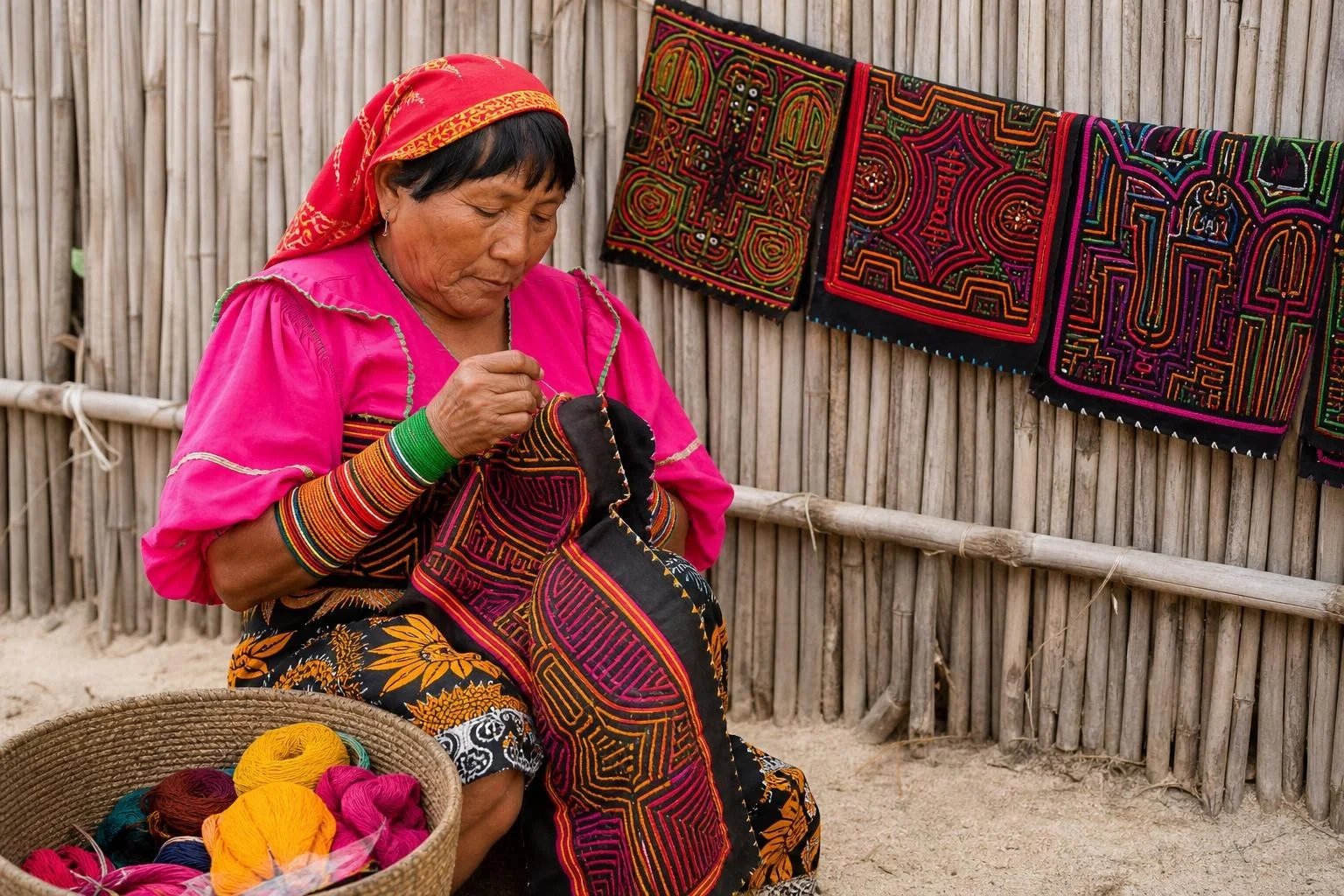
- Living Textile Art: The world-famous mola is a complex multi-layered reverse-appliqué textile created exclusively by Guna women, reflecting spiritual cosmology and natural geometry.
- Pioneering Climate Action: In 2024, the island community of Gardi Sugdub executed one of the first planned climate change relocations in the Americas, moving families to the new mainland town of Isberyala.
- Ethical Travel: Direct bookings with native host families on Isla Pelícano preserve local sovereignty, support community schools, and respect comarca customs.
1. Origins, Migration & the 1925 Dule Revolution
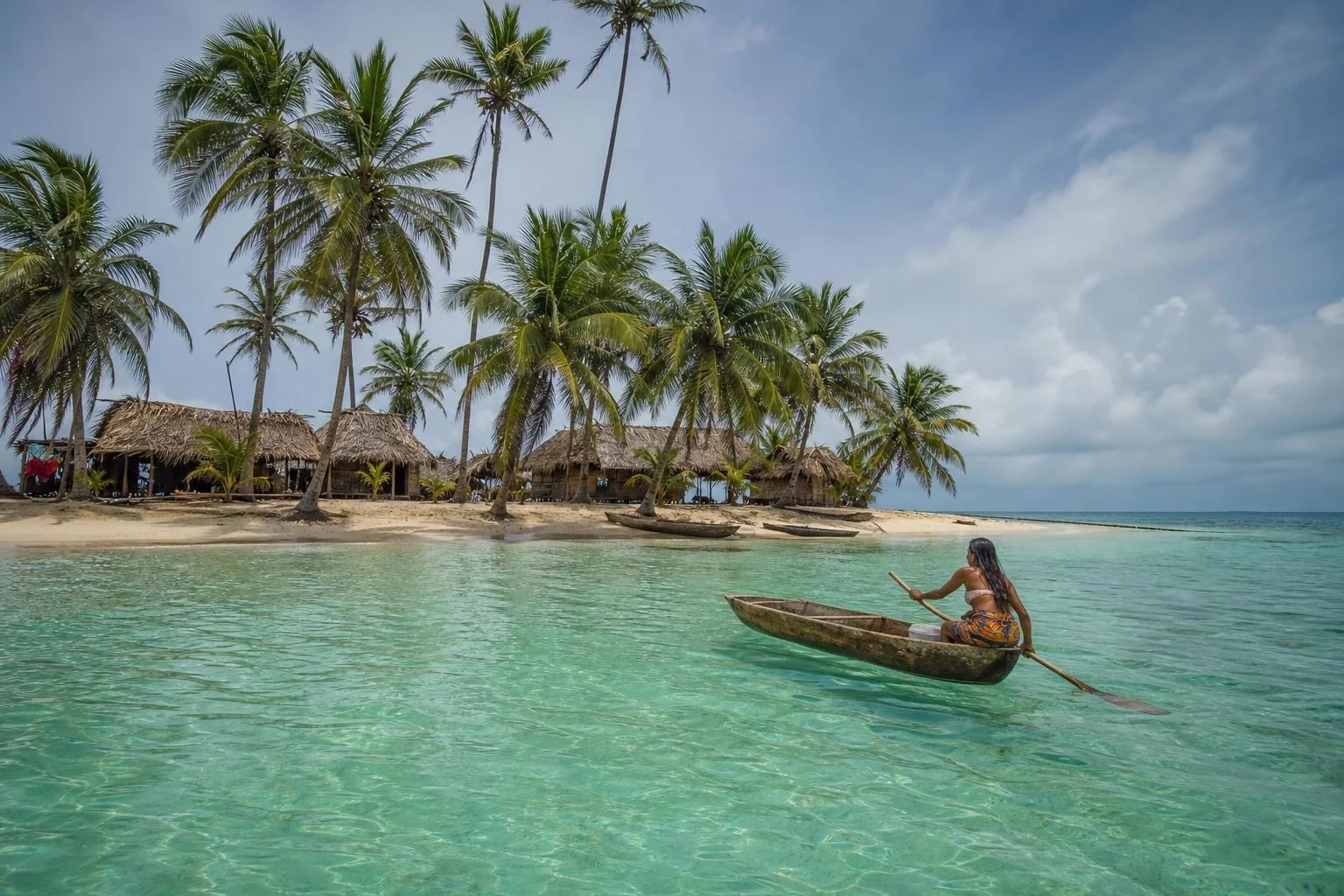
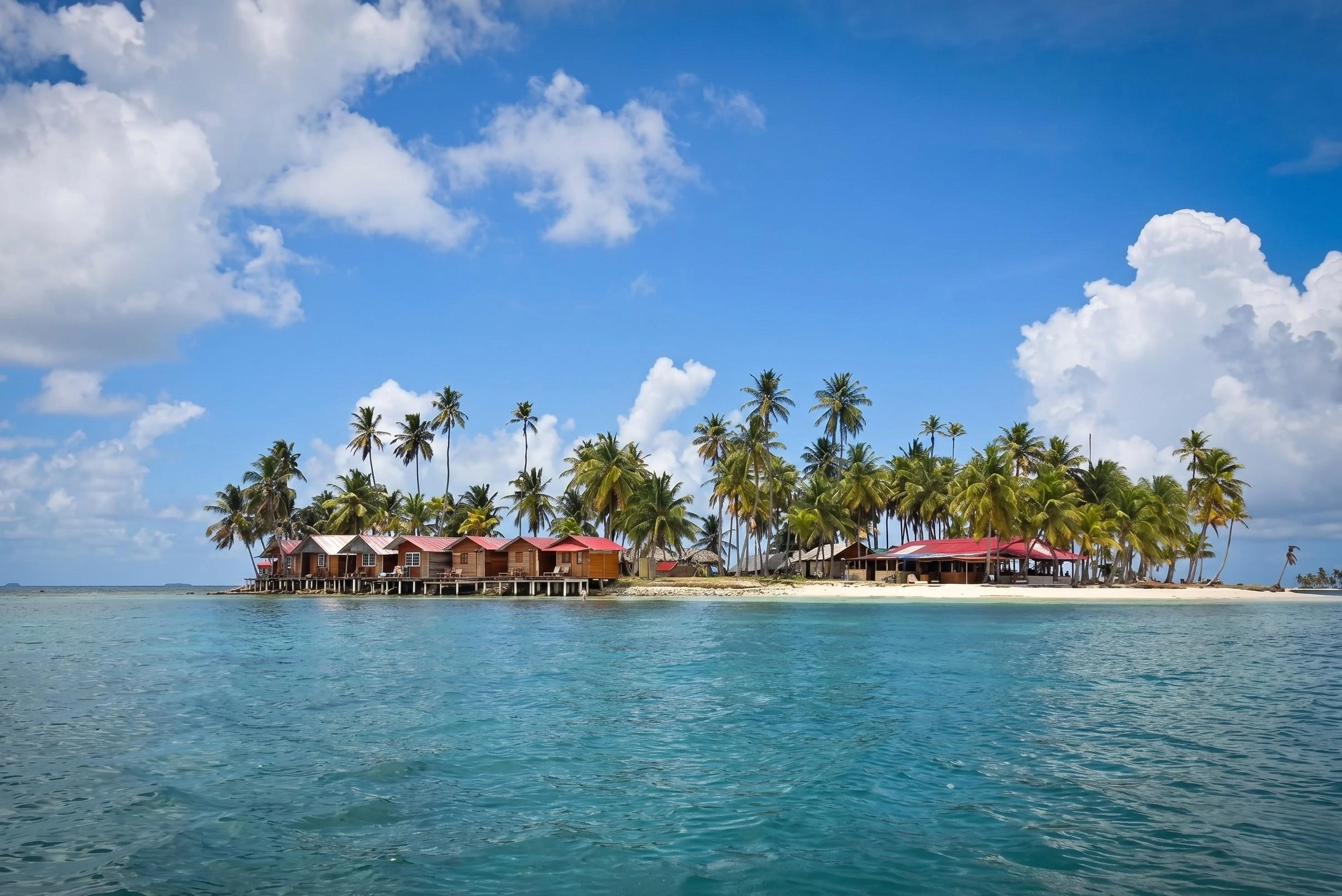
The Guna people originally inhabited the inland rainforests of the Darién gap and the Atrato River basin. Beginning in the 17th century, under intense pressure from Spanish conquistadors and hostile neighboring groups, Guna families migrated northward toward the Caribbean coastline and settled across the offshore coral islands. The islands offered cool trade winds, natural defenses against invasions, and freedom from malaria-bearing mosquitoes.
The defining crucible of modern Guna history occurred in February 1925. In response to aggressive attempts by the Panamanian national police to suppress the Guna language, forbid traditional molas and gold nose rings (olasu), and force cultural assimilation, our people rose up under the visionary leadership of Nele Kantule and Simral Colman in the historic Dule Revolution.
The uprising resulted in the declaration of the Republic of Tule and led to formal peace treaties granting Guna Yala constitutionally recognized territorial autonomy. Every February, islands across the comarca commemorate this victory with reenactments, traditional songs, and cultural pride. In 2010, the Panamanian government officially recognized the spelling Guna (replacing the colonial Spanish spelling Kuna) to accurately reflect indigenous phonetics.
2. Matrilineal and Matrilocal Society: The Role of Women
Guna society is famously matrilineal and matrilocal. When a young man and woman marry, the husband moves into the family compound of his wife's mother. Descent and inheritance pass through the maternal line; family homes and agricultural plots belong exclusively to the women.
Daughters are deeply celebrated at birth because they ensure the family compound remains intact for future generations. While men traditionally undertake open-sea fishing, mainland agriculture, and political representation as sailas, women manage family finances, hold veto power over domestic decisions, and generate substantial independent income through their world-renowned mola textile work.
3. Community Assemblies & Sacred Chants (Onmaked Nega)
The civic and spiritual nerve center of every inhabited island is the Onmaked Nega (Congress House), an expansive open-air hall built of bamboo poles and wild palm thatch. At the center of the hall, traditional chiefs—the sailas—recline in hammocks and sing long, melodic chants that preserve ancestral history, moral teachings, and spiritual mythology.
Beside them, the arkar (interpreter) translates the metaphor-rich sacred verses into everyday Dulegaya for the gathered community. Assemblies resolve family disputes, coordinate communal labor, regulate fishing seasons, and set local tourism rules in an open, participatory democracy.
4. The Sacred Art of Molas and Traditional Attire
The mola is the cultural soul of Guna artistry. Historically derived from geometric body painting with natural pigments (jagua and achiote), molas evolved with the arrival of trade cloth into intricate textile panels forming the front and back of women's blouses.
Crafted using reverse-appliqué needlework, artists layer up to four or five contrasting sheets of cotton, meticulously cutting and stitching tiny borders so lower colors reveal geometric labyrinths, marine turtles, pelicans, and cosmological legends. A single high-grade mola can require four to six weeks of dedicated evening labor.
Complete traditional dress also includes wini (tightly wound beaded glass strands on forearms and calves), the olasu (gold nose ring), a red-and-yellow headscarf (muswe), and a wrap-around printed skirt (saburet).
5. Essential Dulegaya Language Dictionary
The native tongue of Guna Yala is Dulegaya (the language of the people). Learning a few respectful expressions will delight your host family and open doors during your stay:
| Guna Term (Dulegaya) | Pronunciation | Native Meaning & Cultural Role | English Translation |
|---|---|---|---|
| Nuedi | Nue-di | Common respectful greeting, thank you, and well-wishing | Hello / Thank you / Be well |
| Onmaked nega | On-ma-ked ne-ga | Traditional Congress House; communal civic and spiritual meeting hall | Community Congress House |
| Sahila | Sa-hi-la | Traditional chief, singer of sacred chants, community spiritual leader | Traditional Chief / Spiritual Leader |
| Arkar | Ar-kar | Spokesman and interpreter of the Sahila's chants to the community | Chief's Interpreter / Spokesman |
| Mola | Mo-la | Layered cotton textile hand-stitched with reverse-appliqué technique | Mola (traditional layered textile) |
| Wini | Wi-ni | Long strings of glass beads wrapped tightly in geometric patterns on limbs | Beaded wrist and ankle bands |
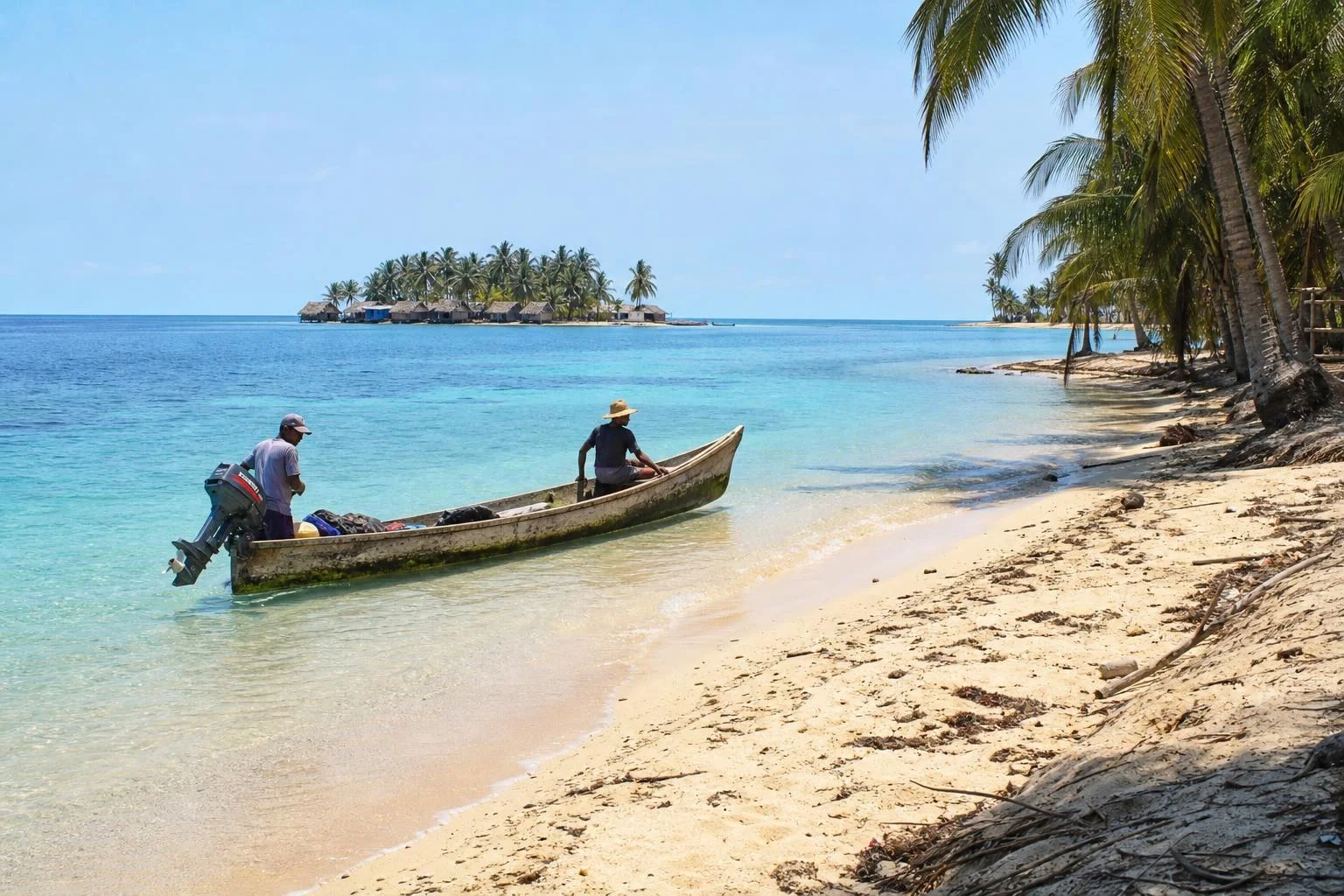
| Ulu / Cayuco | U-lu | Traditional dugout canoe carved from a single tropical mahogany or cedar trunk | Traditional wooden dugout canoe |
| Inatuledi | I-na-tu-le-di | Traditional herbal medicine doctor who heals with sacred botanical plants | Traditional herbalist / Medicine man |
| Nele | Ne-le | Spiritual seer and clairvoyant diagnosed through dreams | Spiritual seer / Clairvoyant |
| Nuchu | Nu-chu | Protective wooden anthropomorphic spirits carved from sacred timber | Carved protective spirit figure |
| Inna | In-na | Sacred fermented corn and sugarcane beverage; also female puberty ceremony | Sacred fermented chicha / Puberty rite |
6. Gardi Sugdub Relocation & Modern Climate Adaptation
In 2024, Guna Yala made international history when the community of Gardi Sugdub (Crab Island) completed a historic climate relocation. Facing rising sea levels, severe island overcrowding, and powerful storm surges, over 1,200 residents made the democratic decision through their congress to relocate to the newly constructed mainland community of Isberyala.
This historic achievement represents one of the world's first planned, community-led indigenous climate change adaptations, proving the enduring strength of Guna self-governance in the face of modern ecological challenges.
7. Ethical Travel & Direct Community Support
Tourism in Guna Yala is designed as a sustainable exchange of cultural respect rather than passive corporate consumption. When booking through overseas travel brokers or city agencies in Panama City, a substantial markup (25% to 40%) stays with middlemen who contribute nothing to island infrastructure.
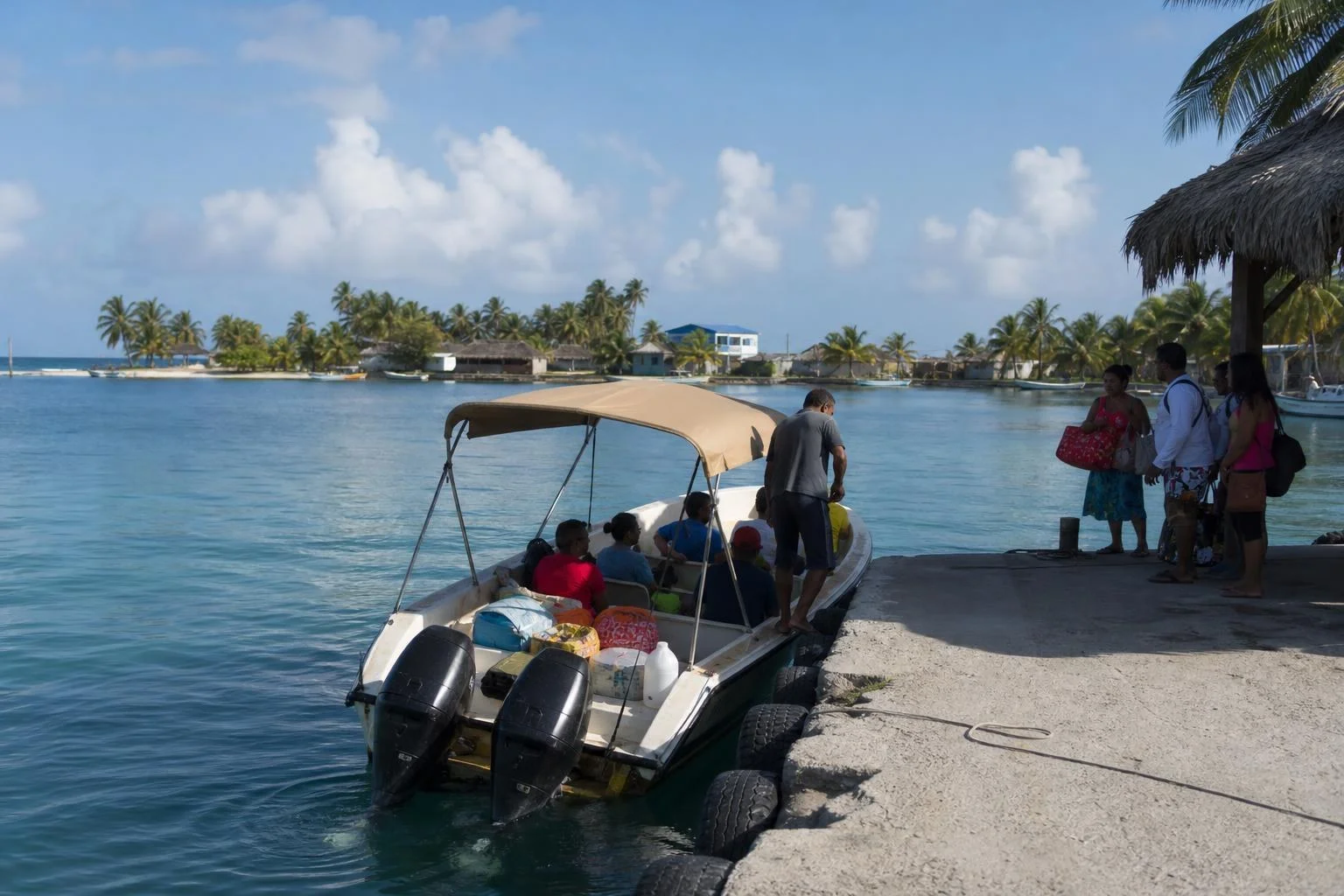
By booking directly with us on Pelicano Island via WhatsApp (+34 679 797 101), you ensure that 100% of your travel investment directly supports local boat captains, traditional cooks, fishermen, and educational supplies for Guna schoolchildren.